
How to Pronounce Charcuterie
Learn how to pronounce Charcuterie, it's origin, and history.
Bill Bradley
1/9/20263 min read
How to Pronounce Charcuterie
Charcuterie has become one of the most searched and talked-about food trends in recent years. From wedding receptions and corporate events to casual nights at home, charcuterie boards are everywhere. But many people still ask the same questions:
How do you pronounce charcuterie?
What does charcuterie actually mean?
Where did charcuterie come from?
What is a charcuterie board made of?
This guide answers all of those questions in one place.
How Do You Pronounce Charcuterie?
Let’s start with the question most people Google first.
Charcuterie is pronounced:
shahr-KOO-tuh-ree
(Phonetic spelling: shar-koo-tuh-ree)
The word is French, which is why the pronunciation doesn’t match the spelling exactly. A common mistake is saying “char-coot-er-ee” or “char-cute-ery.” While those versions are widely heard, the correct pronunciation emphasizes the “koo” sound in the middle.
Common miss-pronunciations we hear are: Char-coo-coo, Charpooperie, Char-lu-teal, Shark-Tuah, Chartreuse, Charbooterie, and last but not least the Charcoochie Board.
Knowing the correct pronunciation can make you feel much more confident when ordering, hosting, or discussing charcuterie—especially in social or professional settings.
What Does Charcuterie Mean?
The word charcuterie comes from the French words:
“chair” meaning flesh
“cuit” meaning cooked
Originally, charcuterie referred specifically to the preparation and preservation of meats, particularly pork. Before refrigeration, curing, salting, smoking, and aging meats were essential methods of food preservation.
Over time, the meaning expanded—especially outside of France—to include a broader range of foods served together in a visually appealing way.
The History of Charcuterie
Charcuterie in France
Charcuterie dates back to 15th-century France, where specialized butchers known as charcutiers were trained and licensed to prepare cured meats. These artisans followed strict rules and techniques to ensure food safety and quality.
Traditional charcuterie meats include:
Prosciutto
Salami
Pâté
Rillettes
Saucisson
Charcuterie was originally practical, not decorative. It was about preserving food and maximizing flavor, not presentation.
How Charcuterie Evolved Over Time
As food culture evolved, charcuterie spread beyond France and became popular throughout Europe and eventually the United States. With modern refrigeration and global access to ingredients, charcuterie transformed from a preservation method into a culinary art form.
Today, charcuterie blends:
Old-world techniques
Modern flavors
Creative presentation
This evolution is what gave rise to the modern charcuterie board.
What Is a Charcuterie Board?
A charcuterie board is a curated arrangement of meats, cheeses, and complementary foods served together on a board, platter, or tray. While cured meats are still the foundation, modern charcuterie boards include much more than meat alone.
Common Items on a Charcuterie Board
A well-balanced charcuterie board typically includes:
Cured Meats
Salami
Prosciutto
Soppressata
Chorizo
Cheeses
Soft cheeses (brie, goat cheese)
Semi-soft cheeses (havarti, gouda)
Hard cheeses (cheddar, parmesan)
Blue cheeses
Accompaniments
Crackers and bread
Nuts
Olives
Fresh fruit
Dried fruit
Honey or jam
Pickled vegetables
Mustards or spreads
The goal is to create a balance of salty, sweet, savory, crunchy, and creamy flavors.
Why Are Charcuterie Boards So Popular?
Charcuterie boards have surged in popularity for several reasons:
Visually appealing – perfect for social media and events
Customizable – can be themed, seasonal, or dietary-specific
Shareable – ideal for gatherings and celebrations
No cooking required – easy yet impressive
They are equally suitable for:
Weddings
Corporate events
Baby showers
Date nights
Holiday parties
Friends/Family gatherings
Watching sports
Is Charcuterie Only Meat and Cheese?
Not anymore!
Modern charcuterie boards often include:
Dessert boards
Cheese boards
Breakfast boards
Vegetarian or vegan boards
Candy or chocolate boards
While traditional charcuterie focuses on cured meats, today’s interpretation is far more inclusive and creative.
Why does Something Cheesy Call them Snack Boxes/Cups
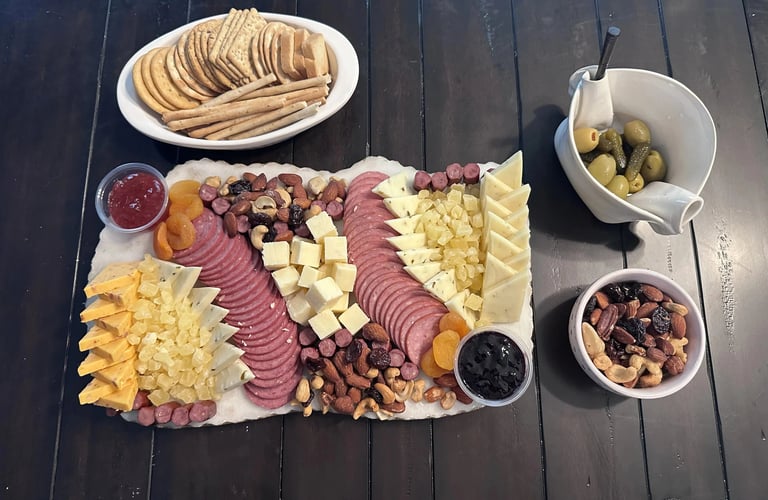
At Something Cheesy we use the term Snack Box/Cup instead of the term Charcuterie because we do not have an authentic style charcuterie board. Something Cheesy provides a more cheese heavy style board with a bit of cured summer sausage meat, pickled items, dried fruits, mixed nuts, and jams/jellies.
Final Thoughts: Why Charcuterie Continues to Grow in Popularity
Charcuterie combines history, flavor, creativity, and community. Whether you’re learning how to pronounce charcuterie correctly, exploring its rich history, or enjoying a beautifully crafted charcuterie board, you’re participating in a centuries-old tradition that has evolved for modern tastes.
From its French roots to today’s gourmet boards, charcuterie continues to bring people together—one bite at a time.